
Luxury Vinyl Floors That Sparkle
Luxury Vinyl Floors That Sparkle
Luxury vinyl plank (LVP) flooring is durable, attractive, and easy to maintain—but the wrong cleaning method can dull the finish, leave sticky residue, or send too much moisture into the seams. At Squeaky Clean, we keep it simple: remove loose soil, use clean microfiber, and damp mop with minimal moisture. No mystery potions, no flooding the floor, and no shortcuts—because sparkle should never come with a side of damage.
Here’s the honest part: not every LVP floor has the same care rules. Products, finishes, warranties, and approved cleaners vary, so always check your flooring manufacturer’s instructions first. Their guidance should take priority over general cleaning advice. That’s Honesty and Integrity in action—we would rather give you the right answer than a one-size-fits-all answer.
Why Damp Mopping Works Best
Damp mopping uses enough moisture to lift soil without soaking the floor. Standing water can work between the planks and may contribute to lifting, swelling, or subfloor damage. A well-wrung microfiber pad traps dirt instead of pushing it around and helps the floor dry quickly. If your mop is leaving puddles, it may be auditioning for a swimming pool—not cleaning your floor.
What You’ll Need
- A microfiber dust mop or a vacuum with a soft-floor attachment
- A microfiber flat mop with several clean wet-mop pads
- A clean bucket or sink
- Warm water
- A pH-neutral cleaner approved for luxury vinyl flooring, when needed
- Clean microfiber towels for spills, edges, and drying
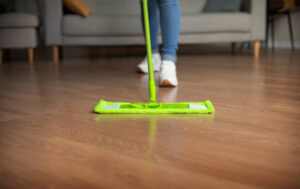
Flat mops are great for general mopping
when used correctly.
How to Clean Luxury Vinyl Floors Step by Step
1. Remove Loose Dirt and Debris
Begin at the far corner of the room and work toward the exit. Move the dust mop in a gentle figure-8 or S pattern so the pad collects dust, hair, crumbs, and grit. Think of grit as tiny sandpaper: removing it first protects the finish and makes the wet-cleaning step more effective. Avoid rapid back-and-forth scrubbing, which can scatter debris instead of picking it up.
A vacuum can also work when it has a soft-floor or brush attachment and the beater bar is turned off. Pick up larger particles as you go so they do not scratch the wear layer.
2. Prepare the Mop and Cleaning Solution
Rinse a clean microfiber pad, wring it out thoroughly, and attach it to the flat mop. The pad should feel damp—not dripping or saturated. If the floor needs more, then dilute a pH-neutral, vinyl-safe cleaner exactly as the label directs. More cleaner does not mean more clean; it usually means more residue. Your floor needs a damp mop, not a bubble bath.
For efficient cleaning, prepare several damp pads in advance and place them in a clean bucket. Change the mop head as soon as it gets dirty; otherwise, you are spreading soil instead of removing it. Never dip a clean mop head into dirty water. Keep clean and used pads separate, and change them often. A dirty mop pad has officially retired from active duty for the moment.
3. Mop in Manageable Sections
Start in one corner and work toward the doorway so you do not walk across freshly cleaned flooring. Use a gentle figure-8 motion and light, consistent pressure. Work in small sections, overlapping each pass slightly so no area is missed. Footprints are many things, but they are not the sparkle we are after.
For a sticky spot, apply a small amount of diluted cleaner to the pad or directly to the soil. If the product label allows it, give the cleaner a brief dwell time, then make a few controlled passes. Use patience instead of extra water or aggressive scrubbing, and never flood the area.
4. Know When to Get Down on Your Hands and Knees
A flat mop is best for routine cleaning, but sometimes Commit to Excellence means getting closer to the problem—literally. Hands-and-knees cleaning gives you better control in corners, along edges and baseboards, around toilets, under cabinet overhangs, and on isolated sticky spots the mop cannot reach effectively.
Use a soft, damp microfiber cloth and a small amount of approved cleaning solution. Support yourself comfortably, work on one small area at a time, and wipe in the direction of the planks. If residue remains, follow with a clean, damp cloth and then dry the area. Ownership means taking care of the details, but it does not mean attacking the floor—skip abrasive pads and excessive pressure.
5. Change the Mop Head and Cleaning Solution Before They Become Dirty
A dirty mop pad cannot clean effectively. Replace it as soon as it looks dirty, becomes loaded with hair or grit, leaves streaks, or stops gliding smoothly. Large rooms, busy households, and heavily soiled areas may require several pads in one cleaning session. Always switch to a fresh pad when moving from a bathroom or pet-accident area to another room. Clean tools are part of clean results.
Change the cleaning solution whenever it becomes cloudy, looks dirty, or becomes discolored. It’s no mystery: it is time for fresh solution. Never dip a used pad back into clean solution. With a two-bucket method, keep one bucket for clean solution and one for rinsing, and replace dirty rinse water too.
6. Dry the Floor as Needed
LVP should dry quickly after proper damp mopping. If you see puddles, streaks, or extra moisture, go over the area with a clean, dry microfiber pad or towel. Keep people and pets off the floor until it is dry to reduce footprints and slipping. Sparkle is welcome; puddles are not!
What Not to Use on Luxury Vinyl Plank Floors
Here’s the honest answer: stronger and harsher do not mean cleaner or more professional. Before using any product, confirm that your flooring manufacturer approves it. In general, avoid the following:
- Steam mops or other high-heat cleaning tools unless the flooring manufacturer specifically approves them as the steam is forced into the seams eventually can cause damage
- Abrasive powders such as baking soda or comet, gritty cream cleansers, scouring pads, steel wool, or stiff-bristle brushes
- Wax, polish, or oil-based products that can create buildup or make the floor slippery such as Bona, Holloway House, Quick Shine type products.
- Vinegar or vinegar-based cleaners unless the flooring manufacturer specifically approves them
- Strong solvents, undiluted bleach, full-strength ammonia, or highly alkaline cleaners unless the manufacturer approves the specific product and dilution
- Dish soap or excessive detergent, which can leave a sticky film that attracts dirt= dirty floor faster than a jack rabbit running from the big bad wolf.
- Sopping-wet string mops or any method that leaves standing water on the floor
- Vacuum beater bars or hard attachments that can scratch the protective wear layer
Do not assume that “natural” or homemade automatically means floor-safe. Essential oils and other DIY mixtures may leave residue or conflict with the flooring warranty. When in doubt, pause and check the care guide instead of experimenting. Your floor does not need to be the final exam in a chemistry class.
Simple Maintenance That Protects LVP
- Sweep, dust mop, or vacuum regularly so grit does not build up.
- Blot spills promptly with an absorbent microfiber towel.
- Use mats at entrances to catch dirt and moisture, but avoid rubber or latex backings if the flooring manufacturer warns they may discolor the floor.
- Place protective pads under furniture legs and lift furniture instead of dragging it.
- Clean high-traffic lanes before they become visibly dull or sticky.
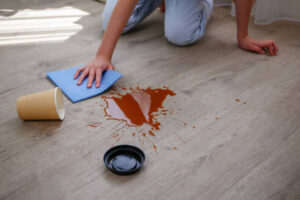
Clean spills to prevent tracking or sticky spots.
You’ve Got This—But We’ve Got the Mop
You can absolutely clean your luxury vinyl floors yourself—we believe in you! But if you’re thinking, “That sounds like a lot of hard work,” you are also absolutely right. Life is short, and your free time does not have to be spent negotiating with a mop. When you’re ready to trade the bucket for a break, call Squeaky Clean at 770-468-9475 or visit SqueakyCleanInc.org. We’ll bring the right tools, the right process, and the elbow grease so you can enjoy the sparkle without all the hard work.
The Squeaky Clean Standard
Every clean reflects our CORE values: Commit to Excellence, Honesty and Integrity, Ownership, Helping Others, and Make Each Day Amazing. We use the right process, protect your floor, change dirty tools, share practical guidance, and leave every room brighter.